Harvest is the busiest, loudest, stickiest time of year at Moshin, and the season when Pinot Noir asks the most of us. If you’ve ever wondered what happens between a cluster hanging on the vine and the bottle on your table, pull up a chair. Here is the short version: we pick by hand, we move the fruit as gently as possible, and we lean on gravity for as much of the trip as we can.
Step one: picking at the right moment
Everything at Moshin starts in the vineyard, where our estate Pinot Noir is sustainably farmed and hand pruned, then hand harvested. We harvest early on purpose. Picking a little sooner captures the grapes’ natural acidity, which gives the finished wine its structure and helps it age well.
This year was a lesson in its own right: 2026 was our earliest harvest on record. A dry, 85-degree March woke the vines up ahead of schedule, then rain during bloom cut pollination short, so we brought in only about half a normal crop. The tricky part was that the grape sugars outpaced their structural maturity, what winemakers call phenolic development. With so few grape clusters on the vine, sugar levels spiked rapidly, meaning we had to pick quickly and will end up with a touch more alcohol in this vintage.
Pinot Noir is a delicate, thin-skinned grape, so hands are gentler than machines. About 80% of winemaking happens right here in the vineyard: deciding when a cluster is truly mature, not just ripe on paper, comes down to tasting it, and that call is as much feel as it is science. From there the fruit heads to the winery, and this is where our cellar really earns its keep.
Step two: the crush pad
Fruit arrives at the top of our four-level cellar, where it’s destemmed, not crushed, so we’re fermenting whole berries rather than broken ones. That gentler start builds more fruit flavor into the wine. (One of our Pinots skips this step entirely and ferments as 100% whole clusters, stems and all — more on that below.)
From there the fruit passes over a shaker table and a sorting table, where the team pulls out anything that isn’t grape, what winemakers call MOG, material other than grapes, along with any damaged fruit. Free-run juice used to make our rosé, pressed by the weight of the grapes themselves, then drains down to settling tanks below, with the wine continuing downhill through the cellar.
Step three: down we go
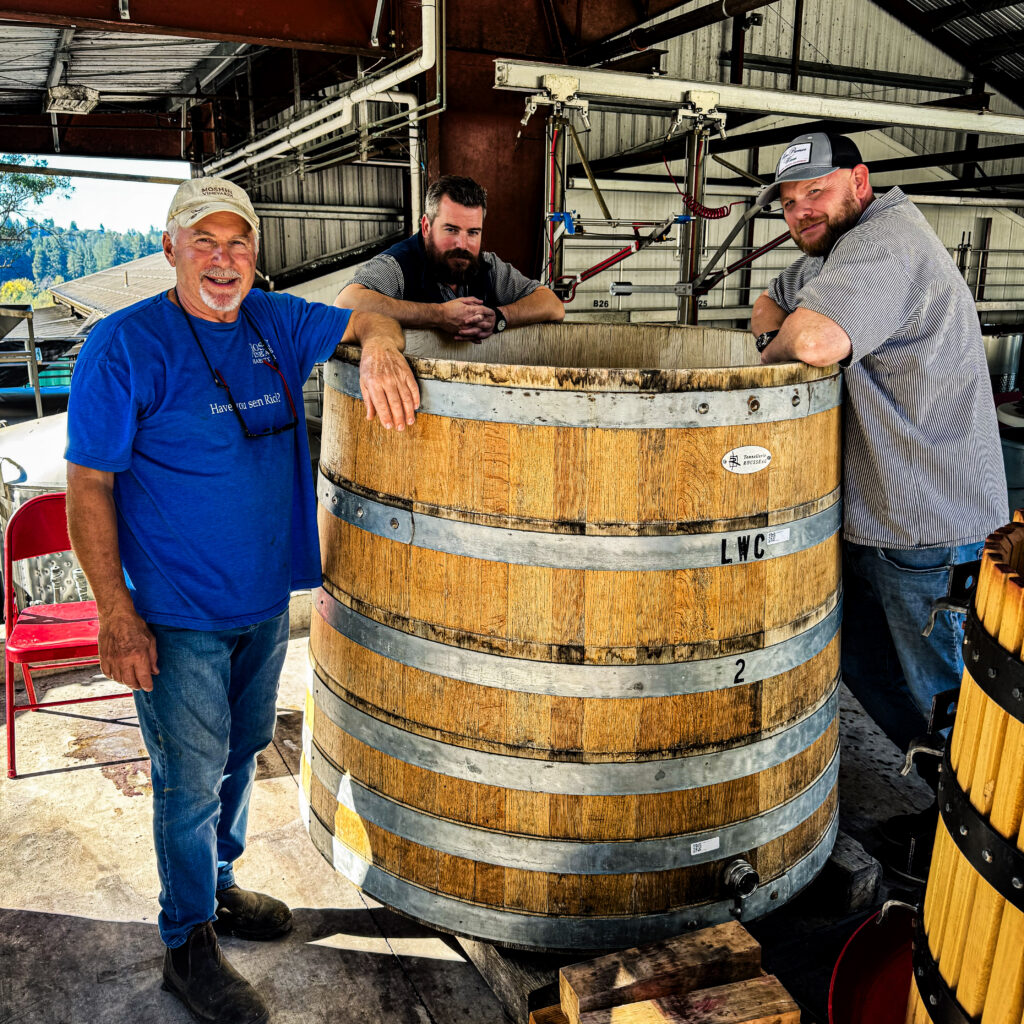
Once the grapes reach the tank, it goes under a blanket of CO2 to keep oxygen away, then into a cold soak: three to five days at a chilly 45 degrees, cold enough to keep any stray bacteria from spoiling the fruit and to hold off fermentation while the juice sits with the skins, slowly pulling out more color and flavor. Our tanks are shallow by design, built that way specifically for Pinot Noir, so the heat from all that fruit can escape rather than build up.
Why does that matter? Cold soak is where Pinot Noir’s aromatics come alive: cherry, spice, flowers and earth. Rough handling can bruise that delicacy, and early exposure to oxygen can flatten it. Letting gravity do the moving, and giving the fruit that slow, cold start, keeps it pure and holds those aromas in the glass.
Step four: fermentation, with a light touch
Our approach is minimal intervention. After the cold soak, the native yeast warms the tank to a maximum 80 degrees kicking the fermentation off, then punch the cap down twice a day to keep the skins in contact with the juice. We ferment with native yeast rather than a commercial strain, because we believe it builds more layered flavor. That yeast doesn’t come from a packet: it’s already living in our winery, in the flora that’s built up in this cellar over the years, and on the grape stems themselves, carried in from the vineyard along with the fruit. Letting that wild, local yeast do the work is part of what makes each vintage taste like it could only have come from here. Malolactic fermentation, the softening step that follows, happens the same native way.
Step five: barrels, then bottle
After fermentation, the wine is pressed into settling tanks, then moved into barrel with only its lightest sediment, not the heavier lees. From there it ages on those fine lees with no racking until it’s time to bottle. When that day comes, the finished wine is moved with nitrogen rather than pumps, one more gentle step before it’s off to the bottle and, eventually, to you.
Try this at home: taste the difference
The Professor’s homework is simple and tasty, and it comes in two bottles. Open our 2021 Pinot Noir Family Reserve, Russian River Valley, and pour it in a large glass, slightly cool, not warm. Take a slow sniff before your first sip and look for the fruit and spice we’ve been talking about. Then ask yourself: what would this taste like if it had been rushed?
If you really want to see how one choice changes everything, open our 2021 Pinot Noir Whole Cluster, Russian River Valley, right alongside it. More on that one below.
A quick aside on whole-cluster Pinot: our 2021 Pinot Noir Whole Cluster, Russian River Valley skips destemming entirely and ferments as 100% whole clusters, stems included. It’s an unusual choice, and you can taste it: the aromatics come across almost like Bazooka Bubble Gum, but the flavor is anything but light. It has real backbone, with the tannin to back it up, so it lands well-structured and balanced rather than fruity and thin.
Hungry after all that? Come back in two weeks, on October 20, when we’ll share a fall dinner built to go with the wine.
See it for yourself
The best way to understand gravity flow is to stand in the cellar and watch it. Schedule a visit to tour the winery and taste with our team, or shop our Pinot Noirs, or join the Wine Club to have new releases delivered. Shipping is available to eligible states; see our shipping page for details.
Stay Curious: subscribe to our newsletter for more lessons from Professor Pinot.
Must be 21 or older to visit or purchase. Please enjoy responsibly.